interlock
what an agent may change
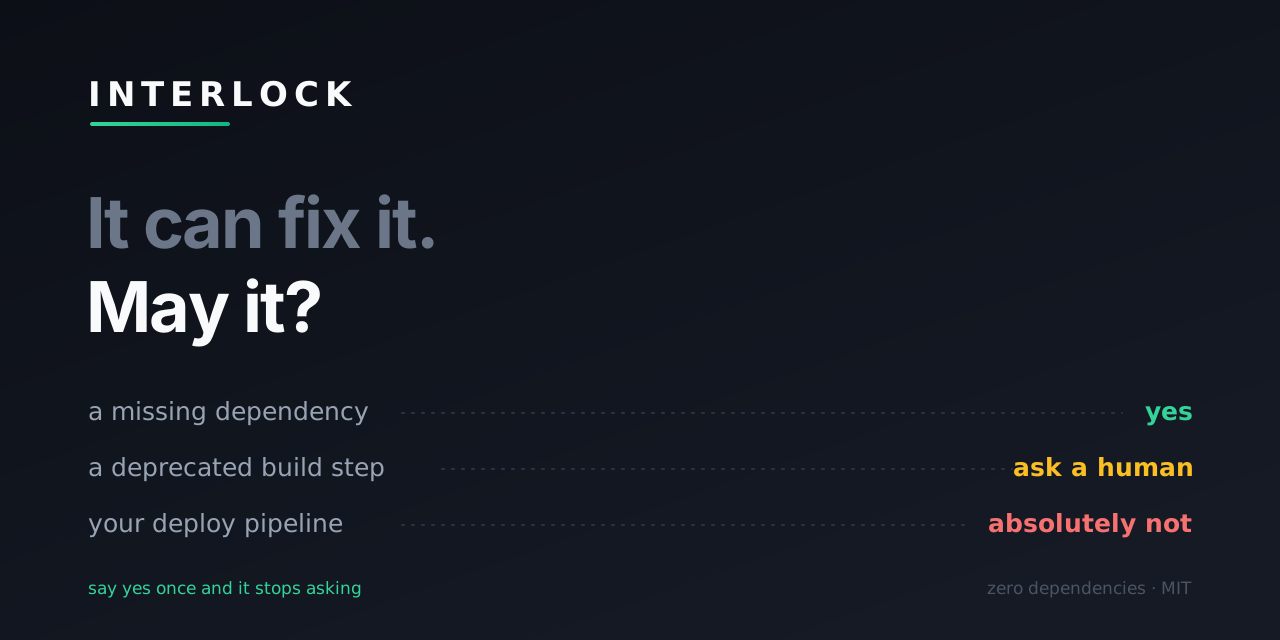
An agent can fix your broken pipeline. Interlock decides what it may fix alone, what needs a person, and what it must never touch.
The problem
Without it
Your build goes red at 2am. The agent reads the log, decides the fix is a tweak to the deploy workflow, and opens a PR. It is well written and it explains itself. At 8:40am someone merges it because it looked plausible — and because the other forty agent PRs that month were fine.
With interlock
REFUSE .github/workflows/deploy.yml is denied by scope.deny
Same agent, same patch. The difference is that somebody wrote down, in advance and in a reviewed file, that nothing automatic touches deploys.
Branch protection and CODEOWNERS guard the merge.
Nothing guards the moment a machine decided something was worth changing. For a human
contributor that is fine — they had a reason you can ask about. For an agent that opened
forty PRs this week, "looks plausible" is the entire review.
What you get
-
Three verdicts, not one
Every failure is auto-fixed, held for a person, or refused outright. Exit codes 0 / 75 / 1, so your workflow can tell "waiting" apart from "broken".
-
Approvals that expire
Clear a fix once and the same failure stops asking. A different failure never gets covered by it. Change the rules and every past approval dies with them.
-
Scope it cannot widen
Which files a fix may touch is read off the diff interlock built — not off anything the agent claims about itself.
-
A record you can argue with
Every decision appends one JSON line: what broke, the verdict, the reason in words, and who signed it. Commit it.
-
No LLM required
Fourteen failure classes matched by rule. An LLM is optional and plugs in where no rule matched — and whatever it writes still goes through the gate.
-
Nothing to run
No service, no database, no account. One JSON file and one
.mjsfile with zero dependencies.
Install
-
Install it
Node 18+. Install from GitHub — the bare name
interlockon npm belongs to an unrelated package, so always go through the repo.npm install -g github:manpreet171/interlock
Prefer not to install anything? Every command below also works as
npx github:manpreet171/interlock <command>. -
Scaffold the policy
interlock init
✔ wrote interlock.json   ← review this in a PR like any other code
✔ created .interlock/    ← the ledger lands here. Commit it.
-
Set the owner, then check it
The linter refuses a placeholder owner on purpose. Exit 1 makes it CI-friendly.
interlock lint
✔ interlock.json is valid mode normal · 1 auto · 7 hold · 6 refuse · rules 0a20347304ad -
Point it at a build that actually broke
gh run view 4471 --log-failed > run.log
interlock gate run.log --repo acme/api --run 4471
missing-python-module  263819a52f2e
  evidence  ModuleNotFoundError: No module named 'requests'
  proposal  add "requests" to requirements.txt

  AUTO  class "missing-python-module" is pre-cleared and the change is in scope

--- a/requirements.txt
+++ b/requirements.txt
@@ -1,3 +1,4 @@
 flask==3.0.0
 gunicorn==21.2.0
 pytest==8.0.0
+requests
-
Wire it into your workflow
One step, only on failure. Exit 75 means held, not broken.
- name: interlock
  if: failure()
  run: |
    gh run view "$GITHUB_RUN_ID" --log-failed > run.log
    npx github:manpreet171/interlock gate run.log > fix.diff
-
Run a week in shadow mode first
Set
"mode": "shadow"and it records every verdict while blocking nothing. A week of evidence with nothing at stake, then switch tonormal.
The part you cannot fake
Every failure gets a fingerprint — a hash of the error once timestamps, run ids, runner paths and commit hashes are stripped out. The same break always hashes the same; different breaks never collide. So an approval is bound to one exact failure, not to "this once" and not to "forever".
HOLD   set-output-deprecated  1c59f09f5474   → a person decides
✔ cleared by Manpreet Singh · warrant valid 14 days

three days later — new run id, new timestamps, new runner path
AUTO   warrant h-627fdffd — cleared by Manpreet Singh (use 1/5)
And because the fingerprint comes from the log, the thing asking for permission cannot forge it.
Source & docs
Full documentation, the four pillars, the decision order and a LangGraph reference agent live in the repository. MIT licensed.
github.com/manpreet171/interlock→